
Can’t believe I’m using this term in my writing, but – Azelaic acid is about to have its comeback era. It’s It-girl era if you will. *sparkle* *sparkle* *sparkle* *whoosh*
And I’m all here for it.
It is, in my opinion, THE ingredient of 2026.
Not because it’s new (it’s not – it’s been used for dermatological purposes since the 70s) – but because we are entering the skincare meta where people are finally tired of chasing shiny/new/”breakthrough” actives that nuke their barrier in exchange for a three-day glow.
Azelaic acid has survived 40+ years of hype cycles because it keeps solving three problems most people actually have:
- Breakouts
- Redness
- Stubborn hyperpigmentation
Mighty big claims there.
So why is it not a staple or top seller or most recommended product of every brand in existence?
Why isn’t every brand pushing it like it’s the next niacinamide or retinol?
I don’t have a definitive answer to that, but I’ll share my theory toward the end, after I show you why Azelaic deserves a spot in nearly every routine.
Studies consulted in making this: 32 (dated 2011 ~ 2024)
2026 belongs to ingredients that are boring on TikTok but absolutely deliver in real skin.
Azelaic is one such ingredient.
Bottom line first
Who will benefit from Azelaic Acid:
- If you have acne or texture and can’t handle harsh exfoliants.
- If you’re dealing with rosacea-prone redness, bumps, and general reactivity that needs anti-inflammatory support.
- Anyone dealing with post-acne marks, uneven tone, or melasma.
What can the ingredient do for you:
- It calms down inflammation
- It keeps your pores clear without being stripping
- It fades pigment by slowing down melanin production.
- It kills acne bacteria enough to help keep mild acne in check
How fast can you expect results:
- Acne and texture: first signs of change by week 2-4, more noticeable changes around weeks 6-8.
- Redness/rosacea: takes a bit longer. Redness should start going away by week 3-6, overall steadier skin by weeks 8-12.
- Pigmentation: always takes the longest to see noticeable results. Lightening should start from week 6-8, visible tone changes by week 12-16
If you’re like most people, you’ll want all three benefits – even if you’re not struggling with all three right now.
So give it 3-4 months of consistency before you decide to keep it or drop it.
As with all things skincare, YMMV.
Speaking of YMMV, if you’re someone who wants to understand how skincare actually works to improve your skin, or you already understand that lifestyle and skin context are far more important than what products you use, then you might like the YMMV letter.
I’ve changed my original 30-day Skin Reset guide for Fall Skin: The First 14 Days (name aside, this is even more relevant in the winter months).
Also, I don’t mention it in the guide specifically, and rather provide a routine template that can be adjusted according to your skin context, but I will mention it here: Azelaic Acid was one of the things that saved my skin after being lazy and allowing for my barrier to get nuked with the seasonal changes.
You can join the letter below.
What it is & how it works
In simple terms: Azelaic acid is a simple dicarboxylic acid your skin “reads” as helpful, and through time of use, rewards you with that glow, instead of inflammation.
You may have read on other blogs that azelaic acid is a natural ingredient that is found on grains (i.e. wheat, rye, barley), as well as being a natural product of the yeast (Malassezia furfur) that lives on our skin.
One of my favorite bloggers mentioned this as well, but unfortunately that is not the whole story.
For commercial purposes (i.e. for making skincare products), azelaic acid is synthetically produced.
(for the science nerds on here, this is done so through a process called ozonolysis of oleic acid, which is a fatty acid found in vegetable oils.)
Before my natural-only squad leaves, let me give you some good news. An azelaic acid molecule is always an azelaic acid molecule.
Meaning: there’s no difference between lab-made and natural in this instance.
Now, for how it works: It tackles the three big fronts I briefly mentioned earlier.
Simultaneously.
(again, why is literally every company not pushing this ingredient in their cosmetics?).
Here’s a more detailed explanation:
1) It’s Anti-inflammatory
AzA brings down the inflammation levels that keep acne and rosacea going. Think fewer bumps, less redness, and better tolerance for the rest of your routine.
Recent studies summarize AzA’s anti-inflammatory activity as a core mechanism behind its clinical results.
2) It’s Anti-keratinizing / comedolytic (in simple terms, It keeps your pores from clogging)
I promised this guide will be easy to understand, but we just need to touch on what keratinization is for a sec.
Understanding this goes way beyond just understanding how a specific acid behaves on your skin.
Your skin cells move upward as they go through their growth cycle.
As they do, they harden and fill with keratin, forming the outer protective layer of your skin, a.k.a. the stratum corneum, a.k.a. the thing I never shut up about.
It’s basically the skin’s “armor-making” process.
It’s a normal process, but because of different things like age, hormones, inflammation levels, or just genetics, it often gets out of sync and those dead cells don’t shed cleanly.
They can stick, clog, and/or start new breakouts or rough texture.
Azelaic acid helps normalize how your skin cells mature and shed, so they don’t jam up follicles in the first place.
And in the case of AzA, it’s a gentle “unclog thyself” signal rather than a peel.
Real world use (and benchmarked versus a placebo) showed altered keratinization patterns after regular AzA use – again, exactly the thing you want for dealing with texture and CCs (closed comedones).
3) It’s Antimicrobial (good for acne)
Azelaic acid also has direct proven activity against acne-related bacteria and can disrupt their internal pH.
Meaning: less fuel for breakouts without the bleachy feel of benzoyl peroxide.
4) Pigment control (for anyone chasing bright skin)
I don’t know of a single person who is not chasing brighter skin.
Luckily, Azelaic Acid has got you covered with brightening as well.it slows pigment formation by interfering with tyrosinase pathways (that’s the enzyme gate for making melanin).
In plain language, it brightens the skin without stinging, which is why it helps post-inflammatory hyperpigmentation (PIH) and melasma over time.
Definitely the thing that’s slower to show, and takes more time, but with so many studies citing AzA’s effects in brightening and evening the tone, and with the ingredient being very well-tolerated by most people, even those with sensitive skin, it has one of the best ROIs in skincare, from both a scientific and real-use perspective.
What this means for you: calmer skin (ultra important in colder weather), fewer clogged pores, and gradual evening of tone – without the strip/burn/sting initial period.
That’s why you’ll see Azelaic across acne, rosacea, and hyperpigmentation care in modern reviews.
I didn’t know where to fit this last bit in this section, but I have to throw it out there for the rozacea people who might come across this post:
Azelaic acid has been shown to stack up well against common rosacea therapies in randomized trials, which is rare for something this tolerable.
People nowadays might be chasing the newest or “coolest-sounding” active, but Azelaic acid is one ingredient that has stood the test of time, with likely more research and data backing it than all of the modern, “sexy” acids together.
That is the definition of a superingredient for me.
And with so much data showing positive results on what it can do for your skin, it’s anything but boring.
How Easy Can You Get Your Hands On It
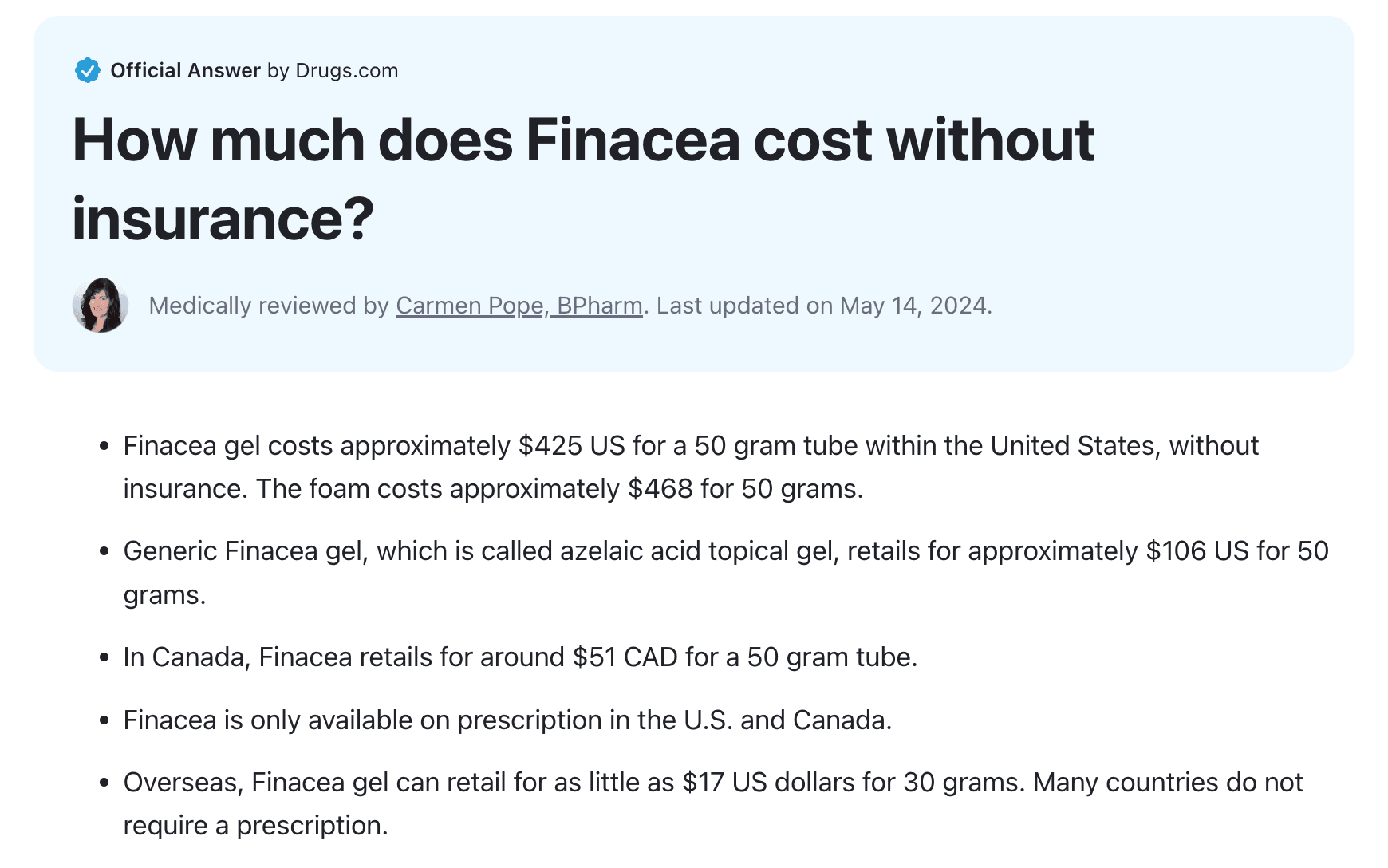
- If you’re in the US or Canada, you can get OTC < 15% (I’ve literally seen 14% formulations on amazon US). prescription standards are 15% and 20%, though as with all things, if you’re not a medical case, I recommend you start with a weaker OTC option
- For most EU countries and Japan, OTC goes up to 20%
- If you’re in Korea like me, you’re out of luck, because it’s listed as a medical ingredient here, and you can’t buy OTC. Though what people do is they order it from countries like Japan, where there are even 20% options listed on sites like Amazon, or just ordering it off iHerb.
Also, to the US people – what the hell is wrong with your medical system?
How to use it
Strengths.
OTC is usually 10%. Prescription is 15% gel/foam, or 20% cream. Those are standard, well-studied forms.
How often.
A 20% (prescription-level) cream is fine to be used 2x a day (AM + PM). Based off of that, you are safe to do with OTC options as you please.
Now, for my personal take that will serve the majority of people on here: Since most people reading this post fall into one or two categories (after replying to thousands of messages and emails, I say this with a very high level of confidence):
- You’re a regular person with decent skin who just wants to level up their routine and is after that glow
- You’re dealing with a skin concern that is not yet a medical case, and are here in search of a solution
For the first category, go with once daily, and increase to 2x if you see noticeable results after 6-8 weeks of use. If you do increase to 2x a day, replace and stop usage of any active you used beforehand.
For example: If you’re using a retinol product at night, use AzA ONLY in the mornings.
If you’re someone in the second category, i.e. you might be struggling with rosacea or regular redness, and you either haven’t yet tried, or are not a fan of BPO, start with an OTC option 2x per day. If you don’t get any reaction, consider going to a derm and getting a stronger option, like 15 or 20%.
If you do, once again – I am sorry to all US people with 16-week derm waitlists, and a $500+ prescription bill.
That matches how Rx labels and derm guides dose it, and it’s the easiest way to keep irritation low.
Routine Order
If you’re giving Azelaic Acid a shot, we want a routine that’s simple, repeatable, and lets you pinpoint the results (or side-effects) to one specific product easily. With that, here’s an easy AM and PM routine when starting AzA:
AM:
Cleanse (or splash with water) → azelaic → hydrate (optional) → moisturizer → SPF in the morning.
I’ll be the first to admit it, I oftentimes skip moisturizer in the AM, but if you’re just starting AzA, I recommend you do apply it.
PM:
Cleanse → azelaic → moisturizer or night cream
If it stings.
Totally normal the first few weeks. The best (and cheapest) way to get around it is to just buffer it: moisturize first, then azelaic on top (or sandwich it between two thin moisturizer layers).
If you’re still irritated, pause for a 5-7 days and restart slower. Labels list stinging/burning, dryness, and itching as common early effects.
Though, to the honest, if you’re going with 10% OTC options compared to 15-20% prescriptions, if the product stings for longer than 10-15 days, I would cut use and/or consider going to a specialist.
Side note if you’re pregnant/breastfeeding/trying to concieve.
Azelaic is one of the few topicals considered safe in all trimesters (up to 20%) in reviews; highly recommended, but still run it by your clinician.
Myths
Just a short list of myths and questions people have been getting wrong about AzA. As a longstanding Reddit addict, most of these are from there.
- “AA is an exfoliant.” → Not like AHAs/BHAs. It normalizes shedding; it is not a peel.
- “Can’t pair with retinol/Vit C/AHAs.” → You can, but more often than not might irritate the sh*t out of your skin.
- “Prescription % = better.” 10% can work great; 15–20% is stronger but personal tolerance is more important.
- “Bleaches skin.” No, it down-regulates tyrosinase (excess pigment)
- “It’s only for acne.” Also helps rosacea and PIH/melasma.
So…Why aren’t brands sprinting to include it everywhere
Azelaic acid covers pretty much everything from redness, to rosacea, to texture, to giving you brighter skin.
Like I said at the start of this post, I don’t really know why it’s not included in every brand’s top product rotation, and why brands aren’t spending heaps of money on campaigns trying to influence you to get on AzA. So I’ll try to give it my best guess.
Azelaic acid isn’t flashy and won’t give you “wow” results overnight.
It also probably won’t give you that crazy (temporary) glow after 2 days of use.
The current skincare and cosmetics climate is such that hype wins and consistency gets shoved in a corner.
Which is exactly the point of Azelaic – consistency.
Fewer breakouts, less texture and redness, and brighter and calmer skin.
It’s the perfect “default” state for your skin to be in. Though that is achievable if you’re consistent with it, over a course of multiple weeks. Which is literally anti-everything that’s happening online.
I could be totally wrong, but for an ingredient that seems to do it all, with decades of research and data behind it, for once I wished brands pushed it more and did more campaigns featuring Azelaic products.
I suppose my rants will have to do for now. Anywho, to finish this off – if your goal is calmer skin, fewer clogs, and a slow but steady fade of marks – Azelaic acid is the ingredient to watch out for in 2026, and consider incorporating into your routine.
Again, if you get sh*tty skin in the colder/drier months (and, since I’ll be doing a giveaway, happen to like free money), check the letter above.
Thanks for reading.
K. Hoe